
#TEGANG · Nervous System + Yoga Culture Fix
- Elliot Arifin
- Jul 28
- 2 min read

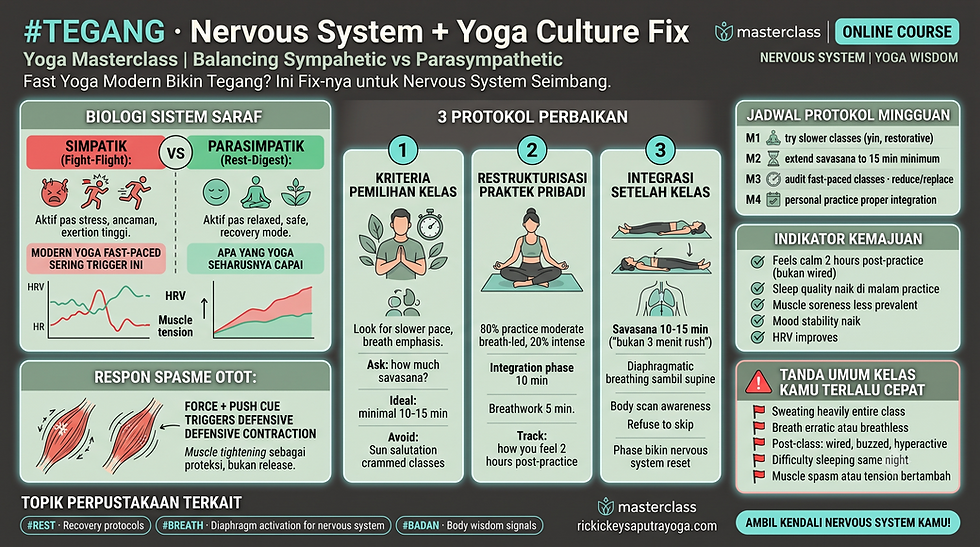
The nervous system biology
SYMPATHETIC vs PARASYMPATHETIC
SYMPATHETIC (fight-flight):
Aktif pas stress, ancaman, exertion tinggi
HRV rendah, HR naik, tension bertambah
Modern yoga fast-paced sering trigger ini
PARASYMPATHETIC (rest-digest):
Aktif pas relaxed, safe, recovery mode
HRV naik, HR turun, tension release
Yang seharusnya yoga achieve
MUSCLE SPASM RESPONSE:
Force + push cue triggers defensive contraction
Muscle tighten sebagai proteksi, bukan release
The 3 protocols
Protocol 1 · Class Selection Criteria
Look for: slower pace, breath emphasis, integration time
Ask instructor: how much savasana at end?
Ideal: minimal 10-15 min savasana beneran
Avoid: 60-min classes yang cram 30+ sun salutations
Prefer: yin, restorative, atau slower vinyasa
Protocol 2 · Personal Practice Restructure
80% practice moderate pace, breath-led
20% intense (kalau kamu suka strong flow)
Every practice: min 10 min integration phase
Every practice: breath work 5 min sebelum atau setelah
Track: how do you feel 2 hours post-practice?
Protocol 3 · Post-Class Integration
Savasana 10-15 min (bukan 3 menit rush)
Diaphragmatic breathing sambil supine
Body scan awareness
Refuse to skip integration phase
Ini phase yang bikin nervous system reset
Practice schedule
WEEKLY PROTOCOL
Assess: how do you feel 2 hours after each class?
Week 1: try slower pace classes (yin, restorative)
Week 2: extend savasana to 15 min minimum
Week 3: audit fast-paced classes · reduce or replace
Week 4: personal practice with proper integration
Indicators of progress
Feels calm 2 hours post-practice (bukan wired)
Sleep quality naik di malam practice day
Muscle soreness less prevalent
Mood stability naik
HRV improves (kalau kamu track)
Common signs your class is TOO fast
Sweating heavily entire class
Breath erratic atau breathless
Post-class: wired, buzzed, hyperactive
Difficulty sleeping same night
Muscle spasm atau tension bertambah
Related library topics


Comments